Ignoring a missing tooth is more than a minor issue. Discover the cascading effects of tooth loss on overall oral health, including jawbone deterioration, dental alignment changes, and TMJ problems, and learn how to proactively manage these unforeseen consequences.

A Lost Tooth: An Overlooked Signal for Your Oral Health
It's quite common for adults to experience the loss of at least one tooth. Yet, if the gap isn't visible or doesn't cause immediate discomfort, many tend to simply ignore it. This casual approach can, over time, significantly disrupt the delicate balance of your oral health. Each tooth isn't an isolated entity; it's a vital component of a complex, interconnected oral system. When even a single 'gear' in this intricately meshed dental structure goes missing, a chain reaction of changes begins throughout your mouth. These changes might seem minor at first, but as time progresses, they can lead to a variety of unexpected problems. Therefore, recognizing the potential seriousness of tooth loss from the outset and exploring appropriate solutions is crucial.
The Chain Reaction a Gap Initiates Within Your Mouth
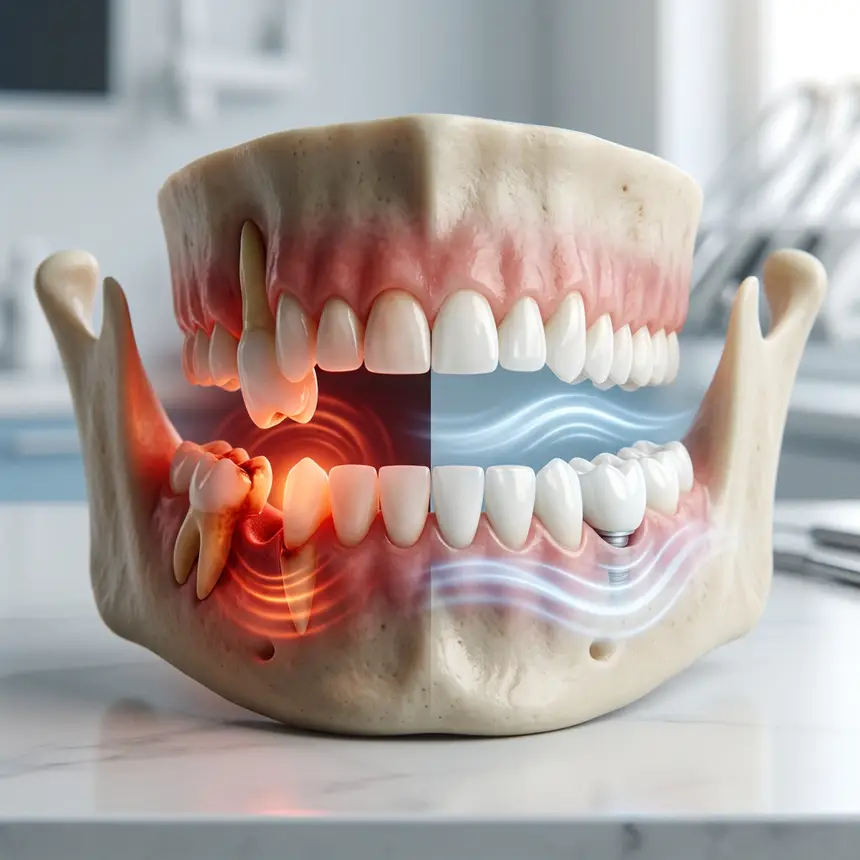
Leaving a space from a lost tooth vacant for an extended period triggers several changes inside your mouth. Firstly, the jawbone no longer receives the necessary stimulation from chewing, leading to a gradual reduction in its volume and density. This condition worsens over time, weakening the foundational support and potentially complicating future tooth replacement procedures. Secondly, adjacent teeth tend to drift or tilt into the empty space. Furthermore, the opposing tooth in the other jaw, lacking anything to bite against, may over-erupt or grow longer out of the gum line. This disrupts the overall dental alignment, throws off the balance of your bite, and reduces chewing efficiency. Thirdly, losing a tooth often leads to an unconscious habit of favoring the healthier side for chewing. This one-sided chewing places excessive strain on your temporomandibular joint (TMJ) and surrounding muscles, which can result in symptoms like clicking sounds or pain in the jaw. These issues are not isolated; they pose a significant risk for a cascading decline in overall oral health. To prevent such scenarios, it's essential to consult with a dental professional for an accurate diagnosis of your oral condition.
※ This post contains affiliate links. I may earn a commission at no extra cost to you.


Making Smart Choices for Your Future Oral Well-being
When a missing tooth issue is overlooked and left unaddressed, a relatively simple problem can escalate into a complex and difficult situation. What might initially be a straightforward procedure to replace a single tooth could, over time, require extensive interventions like orthodontic treatment or additional bone grafting. This not only extends the treatment duration but also significantly increases overall discomfort and burden. It's akin to ignoring minor cracks in a house's foundation until the entire structure needs rebuilding. Changes within the mouth often don't cause immediate pain, making them easy to dismiss. However, these subtle, unseen developments eventually lead to major issues. Therefore, even if you currently feel no particular discomfort, if you've lost a tooth, don't hesitate to consult a dental professional to get an accurate assessment of your oral health. Taking timely action and finding appropriate solutions is the smartest way to protect your long-term oral health and maintain your quality of life.
Frequently Asked Questions
Q. I'm missing one tooth, but I don't feel any immediate discomfort. Is that okay?
A. While you might not feel immediate discomfort, leaving a missing tooth gap unaddressed can lead to long-term oral health issues like shifting adjacent teeth, jawbone deterioration, and TMJ strain. It's best to consult a professional before problems escalate.
Q. What additional procedures might be needed if I delay addressing a missing tooth for too long?
A. If teeth shift or tilt, orthodontic treatment might be required before tooth replacement. Also, if jawbone loss occurs, additional bone grafting procedures may be necessary, making the overall treatment more complex and lengthy.
Q. How quickly does jawbone loss occur after losing a tooth?
A. Jawbone loss typically begins most rapidly within the first year after tooth loss, and its volume and density gradually decrease over time. This can weaken the foundational support needed for future tooth replacements.
Q. Can a missing tooth affect my jaw joint (TMJ)?
A. Yes, losing a tooth can lead to an imbalanced chewing habit, putting uneven pressure on your jaw joint and surrounding muscles. This can result in TMJ disorders, pain, and even headaches.